Retail marketers have the tough job of constantly keeping pace with consumer expectations. And they are a-changing.
Gen Z, which currently has $450 billion in spending power and makes up 40% of global consumers, ignores ads of any kind. Instead, they rely on:
- Social proof.
- Online reviews.
- Extensive research.
- Discounts and deals.
To catch their attention, you need a blend of new formats, platforms, partnerships, and promos. Here are six to experiment with this coming year:
1. Rewards-based ads
Instead of paying upfront for impressions that may or may not convert, brands are shifting spend into environments where every dollar is tied to a purchase, like cash back rewards.
This stretches your budget, and can build loyalty — a cascading offer (15% off for first purchase, 10% off for second purchase, 5% off for third purchase) keeps younger audiences eager and able to spend again.
Did you know? Cash back rewards eliminate fake clicks that inflate campaign metrics and waste ad spend. For fraud to happen, a hacker would have to steal someone’s phone, log into their banking app to see what rewards they have, use the proper card to make a purchase, and route cash back to their account. The chances of that happening are exceedingly low. Read more about the unexpected benefits of cash back offers here.
2. Commerce media
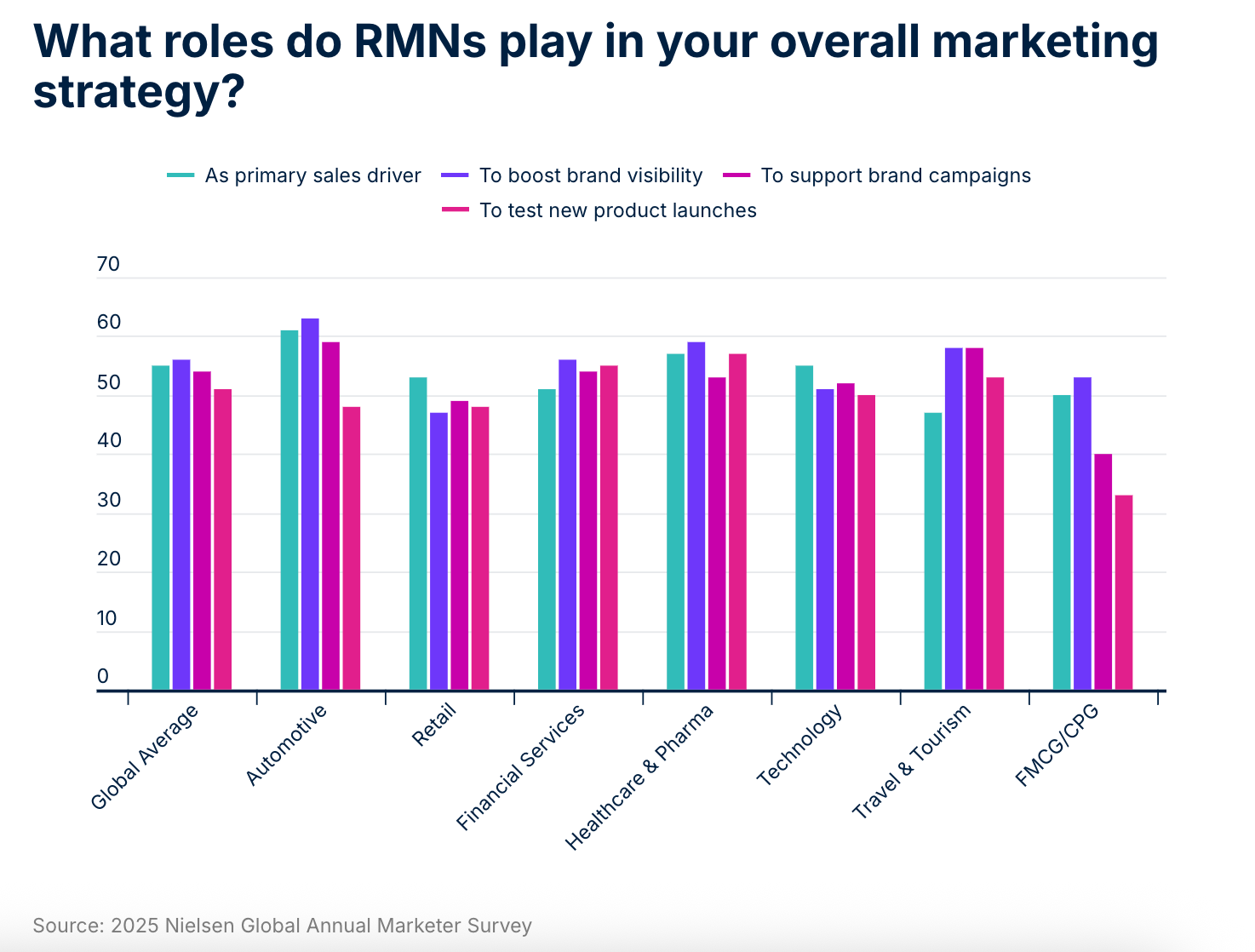
According to Digiday, media buyers are leaning into “total commerce strategies” hard with Amazon, Walmart, and Instagram stealing the top spots. Neilsen’s data backs this up: roughly 65% of marketers said retail media networks (RMNs) are playing a bigger role in their media mix this year.
Why? Because the ad formats are far more diverse. On Amazon, for example, you can show up:
- In search results
- Display ads
- Video ads
- Other sponsored brand configurations
Each of these ads can support a different part of the funnel, from encouraging shoppers to add items to their cart to launching new products to more general brand storytelling.
Guy Leon at Guac Digital says he’s moved 60% of his clients’ display budgets to retailer media networks.
“We’re seeing 4x better performance on Amazon DSP and Walmart Connect compared to traditional display networks because we're reaching people already in shopping mode.”
We’re probably going to see this trend continue. EMARKETER expects that off-site retail media spend — ads that follow shoppers beyond Amazon or Walmart but still use their first-party data — will grow 2 to 3 times faster than on-site spend over the next couple of years. Marketers who get in on RMNs now can build loyalty with those high intent audiences, an experiment that could pay huge dividends later.
Did you know? Unlike traditional digital advertising, commerce media is built on what people actually buy, not just what they browse. That’s exactly how Kard works. We use real transaction data from tens of millions of cardholders to help brands reach consumers based on verified spending behavior. Read our case studies here.
3. Social commerce
If you’re not already doing it, you’re missing out: the share of TikTok shoppers alone has spiked 165% year over year.
Research from Sprout Social shows that 56% of social media users anticipate maintaining their current level of social purchases this year, and 32% expect to buy more. Meeting buyers where they scroll, and making checkout as simple as a tap works, and it’s only getting more popular.
4. Strategic partnerships
Think co-branded campaigns or bundled offers. A skincare brand and a wellness app, for instance, can tap into each other’s audiences, share costs, and provide more value to buyers than they could alone.
Did you know? Commerce media networks like Kard can reveal where else your customers shop, sparking ideas for new partnerships with other non-competitive brands. Chat with one of our team members to get a sense for the valuable data you could be capturing.
5. Affiliate and influencer programs
They’re still effective, but the real impact comes when you pair them with rewards. Affiliates and influencers can generate awareness and trust at the top of the funnel, while cash back offers give consumers the final nudge to convert.
Learn more about why affiliate agencies are recommending cash back rewards here.
6. Out of home and in-store tie-ins
Bridging digital with physical gives customers multiple chances to see and remember your product.
Retailers are using connected screens, pop-up experiences, and digital signage networks to bridge online and offline attention. A campaign that starts on social can continue in-store with interactive displays, AR mirrors, or short-form video loops that mirror your online content.
OOH has also become smarter. With better geotargeting and dynamic creative, brands can run ads that change based on time of day, weather, or local events, making them feel timely. And because people are spending more time in real-world environments again, those impressions carry more emotional weight than a passing scroll.
Want some more ideas? Download our Growth Hacks playbook, packed with actionable strategies to help marketers tackle rising costs, shifting buyer behavior, and loyalty challenges head-on.
What about AI?
AI is permeating marketing strategies like nothing else. One way to use it outside of generating copy, images, or videos is upping your targeting game.
“The strategy crushing it right now for our customers is what I call ‘’context-aware retargeting.’ Instead of showing the same abandoned product, we analyze the user's browsing pattern and show complementary items or seasonal alternatives.” Guy Leon, founder and CEO of agency Guac Digital, shares.
“One home goods retailer saw their retargeting ROI jump 3x when we started showing summer outdoor furniture to people who abandoned winter decor items in March. The key is understanding purchase timing psychology rather than just product interest.”
2 AI side effects to pay attention to
1. Creative convergence
AI has undeniably made marketing easier. You can launch campaigns in days, optimize budgets automatically, and free teams to focus on strategy. But those time savings have led to a big problem: sameness.
So, how do you make your brand stand out? No one has all the answers yet, but here are two things to try.
First, lean into the more human aspects of your product. People can tell if you’re using AI, and that’s not always a good thing. For the most important points of connection with your customers, use your brain and experience to add the nuance and emotion that AI can’t.
Peter Murphy, Founder and CEO of TrackSpikes.co, explains, “Being a lifelong track athlete, I know AI cannot experience the feeling of the track under its feet or the nervousness of a starting block. Our brand is the pure emotion of an actual athlete making an individual best and that is our moat. We are differentiated by that experience, it’s something that AI cannot reproduce.”
Then, focus on technical execution. “Technical execution still separates winners from losers,” Craig Flickinger, website designer, says.
“Everyone's using similar AI tools for content, but most ignore the backend - page speed, proper schema markup, mobile optimization. While competitors focus on AI-generated copy, we're using tools like Google PageSpeed Insights to deliver sub-2-second load times. Technical performance beats pretty content every time in actual conversions.”
2. Privacy
The line between personalization and intrusion is thin, and consumers are increasingly wary of crossing it.
In r/privacy, Redditors say things like: “I can’t help but notice how blurred the line between convenience and tracking is getting. AI tools change what you see on a website based on where your mouse lingers. Email subject lines adjust depending on your open history and device type. You don’t have to fill out a profile—AI builds one behind the scenes.”
And they’re not alone. KPMG found that while 74% of shoppers expect personalization, 73% say brands collect too much data.
For retail marketers, this means building systems that make it clear how their data shapes their experience. Fractional CMO, Peter Murphy Lewis, predicts:
“I think the future is going to be consent-based personalization. Retailers that ask and don't assume are going to win. Rather than, ‘we tracked you,’ the messaging should read, ‘you told us this mattered, so here is how we made it better.’ That shift in tone not only builds trust but also keeps you ahead of tightening data laws.”
Want to use transaction data without compromising privacy? See how to win in a cookie-less world here.
What it takes to win in 2026
AI, new media channels, and shifting consumer habits are changing how people discover new brands and decide what to buy. But that doesn’t mean you need to chase every new platform or format. Start with the ones that make the most sense for your audience and budget first, see how they perform, then adjust your strategy accordingly.
Kard makes it easy for marketers to see what’s working and what’s not — and adjust their budgets on the fly.
Want to learn more about how it works? Get a demo today.