Generative AI has made it really easy to crank out really clean, on-brand creative. Sure, that saves time. And sure those assets get some attention and clicks.
But now, all of a sudden, every campaign is perfectly formatted, perfectly on-message — perfectly forgettable. It’s even spreading to LinkedIn. As Ellie Bean at Domo pointed out recently:
“As I scroll [LinkedIn], I notice I feel averse to certain posts that are too eerily…correct. When we speak and write casually, we naturally switch points of view and mix up words. Most people don’t even notice. But take those mistakes away and the words feel less human.”
Here’s the problem: “clean,” “grammatically correct,” “polished” = safe. After a while, safe starts to blend in.
To reach new audiences this year, you’ll need something a little off, a little unexpected. Something that makes people remember your brand — and maybe even bring it up in conversation, or choose it over a competitor when it counts.
Here are four ideas to get your creative brain firing again.
Tactic 1: Think as outside the box as possible
This should be a given, but with AI, creativity has waned. It’s way easier to reach for ChatGPT than to sit in silence trying to brainstorm by yourself. Reddit is a great place to find inspiration for clever, handmade, or just plain strange marketing ideas. Here’s a smattering of memorable campaigns we found:
From Analog_alison re: IKEA:
“IKEA did a magazine ad for cribs that was a pregnancy test you peed on. If it was positive, you got a discount on a crib. Small campaign, but created a lot of buzz because it was just so weird.”
From Specktric_ re: Redbull:
“Back when Redbull was a small Austrian brand in a crowded market, they decided that the best way to market their product in London was to place empty cans in trash cans, on college campuses, and outside of nightclubs to give the impression of popularity. People assumed everyone was drinking Redbull and were influenced to try it for themselves.”
From GreenleafMentor, re: how he built loyalty among his shoppers:
“I own a toy store and gave out bags of pirate treasure, basically a rewards program for kids. They get a nice velvet bag, and every time they purchase something, they get another coin. When they get 5 coins, they can turn them in and get ‘something cool’ which is anything in the store for $10 or less for free.”
From NotSure2505 — this one’s from B2B SaaS, but still gets you thinking about how B2C brands can do something similarly cheeky toward competitors:
“A few years back, I got invited to a competitor and market leader’s local user event where I heard users complaining about critical performance and security fixes and improvements they were asking for that were being ignored. So when another event rolled around, I made up a bunch of plastic lawn signs that specifically referenced the pain points word for word, peppered with the words “Tired of waiting?” We put these on the driveways and around the parking lots where people would see them when they were leaving the event. Got over 20 leads, 4 new signups (5 figure deals) from this one stunt alone and about $50 worth of signs.”
These campaigns worked because they interrupted people’s routines, and they felt human in ways that digital ads can’t replicate. Plus, they show that awareness doesn’t always require a massive budget, just a sharp read on what will make people look twice.
Tactic 2: Try out of home (OOH) marketing
If anyone asked you to quote the most iconic lawyer billboard from where you grew up, you could probably do it on command. (LA folks, does “Something wrong? Call Anh Phoong” ring a bell?)
Those ads stick because they are part of the physical world you move through — and that makes them impossible not to notice. You can’t scroll past them, you can’t mute them. They sit in your line of sight long enough to become a part of your subconscious.
Apple saw that potential early. The company’s “Shot on iPhone” campaign turned everyday users into creators and made the act of participating feel like joining a global art project. People wanted to be featured on those billboards. They wanted to see their work out in the world, next to skyline landmarks and subway stations.
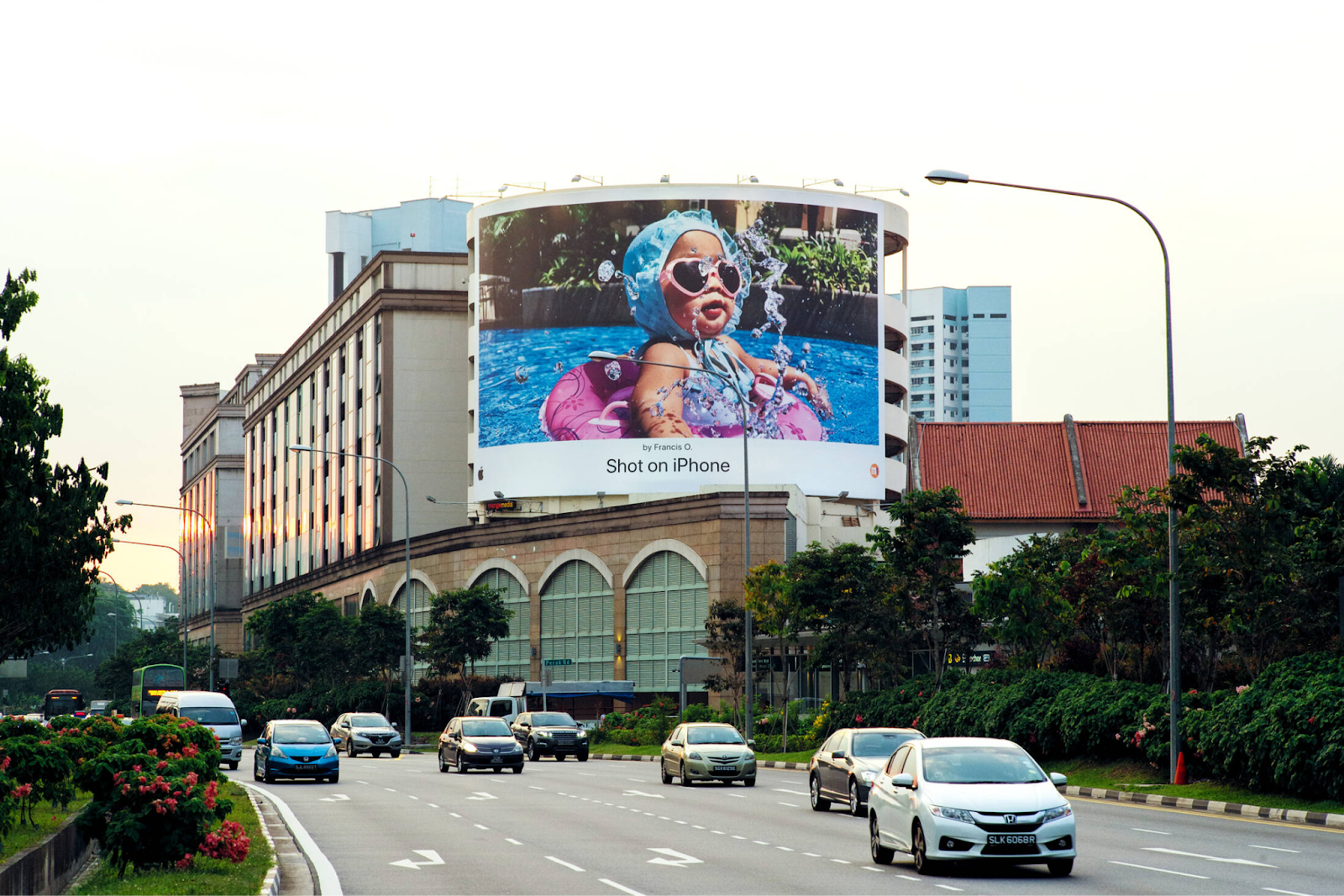
And that wasn’t just a community-building exercise, it was a big revenue driver. As James Hurman, a New Zealand-based entrepreneur, investor, and advertising effectiveness expert points out:
“Apple increased their global market share of smartphones by 5 percentage points. If that doesn’t sound like much, remember that in 2024, the total global value sales of smartphones was $800B. 5% of that is $40B. They made an extra $40B in 2024 alone. And plenty more in the 9 years prior.”
A plain billboard like “Shot on iPhone” works just fine (evidently). But you can make an even stronger impression with connected screens, pop-up installations, and digital signage networks to bridge online and offline attention. A campaign that starts on social can continue in-store with interactive displays, AR mirrors, or short-form video loops that mirror your online content, completing your omnichannel marketing strategy.
Tip: Reddit is a surprisingly strong source of billboard material, surfacing exact phrases people use to rave or complain — about clothing fit, food cravings, value, convenience, or frustration — ideal copy to repurpose for OOH campaigns.
Tactic 3: Write an industry report
One of the most reliable ways to earn brand awareness is a version of the exact thing you’re reading right now: an industry report.
B2B marketers have known this secret for years. They’re not publishing gated assets solely to collect email addresses. They’re publishing gated assets because they get picked up by the press, which means their data is cited and used long after launch.
Retail, QSR, and subscription brands can run the same play with even better raw material — their massive customer base. When you already have a huge customer list, it’s easy to ask questions that are genuinely interesting to the people you’re selling to and the industry at large.
Think:
- Flavor preferences
- Cancellation triggers
- Gift-giving trends
- Emerging packaging types
- Sustainability attitudes
- Best comfort foods
Offer an incentive (a sweepstakes, early access to a cool new product, a high-value prize) to drive participation. Then turn the results into a report people actually want to read, with real consumer feedback that brings the data to life.
If you’re not ready for this scale of a project, you can start with smaller polls. In her Contentment newsletter, Tracy Wallace, Director of Content Strategy at Klaviyo, recommends publishing “pulse checks” that turn shifting behavior into something actionable.
“Think ‘Tariff pulse checks’ or ‘BFCM pulse checks.’ What are consumers doing? The media cares about this, and your target audience, too, since all of us are consumers. It’s your job to tie consumer insight back to your product.”
Tactic 4: Use cash back rewards (to stand out and stay in budget)
If you want to run bold creative, you can’t waste budget on ads that don’t convert. That’s where cash back rewards come in.
Instead of paying upfront for impressions, brands are shifting spend into environments where every dollar is tied to a purchase. Rewards show up in banking apps, where consumers are already in a money mindset.
If they see you’re offering 15% cash back on their first purchase, why would they buy the same or a similar item from your competitor, who has no discounts?
They may have never even heard of your brand before. But if it’s been vetted by their banking app and it’s showing up next to other merchants they recognize, it has to be legit, right? Why not take a chance on it and get cash back at the same time?
Rewards aren’t just an acquisition tool, either. They can nudge people to buy again. Take a cascading offer:
15% cash back on the first purchase → 10% cash back on the second → 5% cash back on the third
If someone is buying gear, back-to-school supplies, exploring new clothing styles, or a skincare regimen, it only makes sense to keep sticking with your brand instead of trying another one. They know they like your products, and can get cash back for buying them.
And with a rewards demand platform like Kard, you only pay when a sale happens. If you’re already running affiliate programs or influencer deals, a cash back platform lets you get more bang for your buck:
- No content coordination. You don’t need to manage creators or negotiate placements.
- Built-in brand awareness. Your offer appears in trusted environments next to brands consumers already know and trust. Even if they don’t redeem right away, they see your name.
- Loyalty by design. The reward structure becomes a natural re-engagement tool that keeps customers coming back after the first purchase.
Stop blending in
Weird ideas, the kind that make someone laugh, pause, or text a friend, are what get remembered.
But weird doesn’t mean unaccountable. With the right tactics and the right performance layer underneath (like cash back rewards) you can do work that breaks through and pays off.
So go bold — and make sure you can measure it.