We don’t have to tell you that customer acquisition is getting harder. You can feel it — budgets aren’t stretching as far and the campaigns you think are going to perform great have stagnating results at best.
Not because they’re not well done, but because either:
- They’re not reaching the people who would resonate with them, or
- People are so numb to ads that they just scroll on by
That may sound discouraging, but it just means that you’ll have to find new ways to stand out. Below, we share a bit more about why customer behavior has changed so much, then share five different tactics worth testing (or at least worth studying) as you plan out your next quarter.
Acquisition has moved closer to the point of purchase
For years, marketers had to target people based on inferred interests, browsing behavior, and lookalike audiences, hoping that a small percentage of a broad TAM would convert weeks or months later.
But we can’t rely on that model anymore.
Third-party cookies are disappearing and iOS and browser privacy controls have dramatically reduced trackable signals. Meanwhile cross-channel journeys have become harder to reconstruct, leaving many teams unsure which campaigns are driving revenue at all.
The best way to know your buyers is to know who they actually trust and what they actually buy. Which is why more and more acquisition spend is moving to channels tied to transactions, trusted voices, and incentives that nudge people to act. One of the clearest examples is the shift to commerce media.
Tactic 1: Commerce media
For years, marketers relied on third-party cookies and behavioral targeting to find and influence buyers. Now, that system is collapsing, and commerce media is coming out on top.
Unlike traditional digital advertising, commerce media is built on what people actually buy, not just what they browse. In other words, ads and offers are displayed to the people who are truly interested in buying your product. As Kard CEO, Ben Mackinnon, puts it:
“The future of performance marketing isn't about impressions or clicks anymore. It's about actual purchases. Transactions are the new cookies, and the transaction data we aggregate gives us a unique window into real consumer behavior.”
If this sounds sort of familiar, you’re probably thinking of retail media networks — the on-site and in-app ad platforms built by Amazon, Walmart, and Target, to extend across the entire web. But those networks only see a slice of a shopper’s world.
Independent commerce media networks, like Kard, aren’t tied to a single retailer.
We have over 47M cardholders in our network (more if you include partners like Fetch) who buy at hundreds of different merchants. That breadth gives marketers a 360-degree view of their customers’ shopping patterns, and lets them send hyperpersonalized cash back offers based on billions of dollars-worth of transaction data from all kinds of credit card, debit card, and fintech platforms — including Buy Now Pay Later apps, which had a 9% YoY increase in volume this year.
Marketers who get in on these networks now get a distinct advantage: direct access to high-intent audiences before commerce media becomes the norm. eMarketer predicts commerce media will represent close to a quarter of advertisers’ digital media budgets in the US by 2029.
Tactic 2: Smart retargeting
One way to use AI outside of generating copy, images, or videos is to up your targeting game. Try using AI to analyze a user’s browsing patterns and show complementary items or seasonal alternatives, rather than the same abandoned product. Guy Leon, founder and CEO of agency Guac Digital, shares:
“One home goods retailer saw their retargeting ROI jump 3x when we started showing summer outdoor furniture to people who abandoned winter decor items in March. The key is understanding purchase timing psychology rather than just product interest.”
While you’re at it, do a deep dive into the backend of your website. Simple technical changes can make a huge difference. Craig Flickinger, a website designer, points out:
“Everyone's using similar AI tools for content, but most ignore the backend - page speed, proper schema markup, mobile optimization. While competitors focus on AI-generated copy, we're using tools like Google PageSpeed Insights to deliver sub-2-second load times. Technical performance beats pretty content every time in actual conversions.”
Tactic 3: Social commerce
To capture and engage today’s consumers, brands need to meet them where they are: on social media. Social commerce, the fusion of shopping and social platforms, has become a game-changer for modern marketers.
Platforms like Instagram, TikTok, Pinterest, and Whatnot have made it possible for brands to turn scrolling into interactive shopping experiences. TikTok is leading the way.
According to eMarketer, 58.8% of Gen Z used TikTok to search for new products. And Capital One finds that 52.5% of Gen Z consumers use TikTok monthly for shopping.
If that doesn’t phase you, eMarketer recently reported that TikTok Shop’s US gross merchandise value surpassed $500M during this year’s Black Friday/Cyber Monday, driven by a nearly 50% increase in the number of consumers making a purchase.
But it's not just about being present on social. Successful merchants need to take an omnichannel approach, ensuring consistency across all consumer channels. As experts at eTail put it:
“We see a wide opening representing the vast array of touchpoints where Gen Z encounters brands. This expansive top requires brands to cast a wide net of engaging, authentic content across multiple channels.”
Tactic 4: Strategic partnerships
Strategic partnerships are essential for brands that want to reach new audiences. Do an outstanding job of promoting a complementary brand or seamlessly integrating with innovative technology, and boom — you near-instantly expand your TAM.
Strategic partnerships can also:
- Rejuvenate brand appeal. Even if there’s a rev-share and an upfront cost to co-marketing, one campaign that reaches a wide audience with a high degree of potential interest can lower your overall CAC while increasing your overall revenue.
- Launch new joint product offerings — potentially those with higher AOV.
- Enhance brand credibility to nudge people toward a purchase they hadn’t previously considered.
If any of those outcomes sound appealing to you, start making a list of potential partners that share similar values and target demographics. Then, approach them having already brainstormed a few ways to drive joint growth.
Even better if you can partner with an eco-friendly brand. Sustainability, ethics, and brand authenticity play a major role in Gen Z and Millennial purchasing decisions. Per Deloitte, roughly two-thirds of Gen Z (64%) and millennial (63%) customers are willing to pay more for environmentally sustainable products or services.
Fenty’s collaboration with the WNBA is a great example, taking a stance on representation, equity, and women’s sports.

For more inspiration, check out Avenue Z’s Best Brand Collaborations of 2025. Unexpected partnerships, like Nike and Skims or Disney and Bath & Body Works, performed particularly well.
Did you know? Commerce media networks like Kard can reveal where *else* your customers shop, sparking ideas for new partnerships with other non-competitive brands.
Tactic 5: Affiliate programs
Affiliate programs are another way to reach new audiences through third parties — brands leverage other companies or individuals to promote their products or services.
Though it’s been around for decades, affiliate marketing has gotten more popular with the rise of influencer marketing. Bloggers and content creators already have an established network of followers who trust their opinions — and who just generally like their personality and what they stand for. I mean, you can’t help but smile when you see a brand collab with The Rizzler.
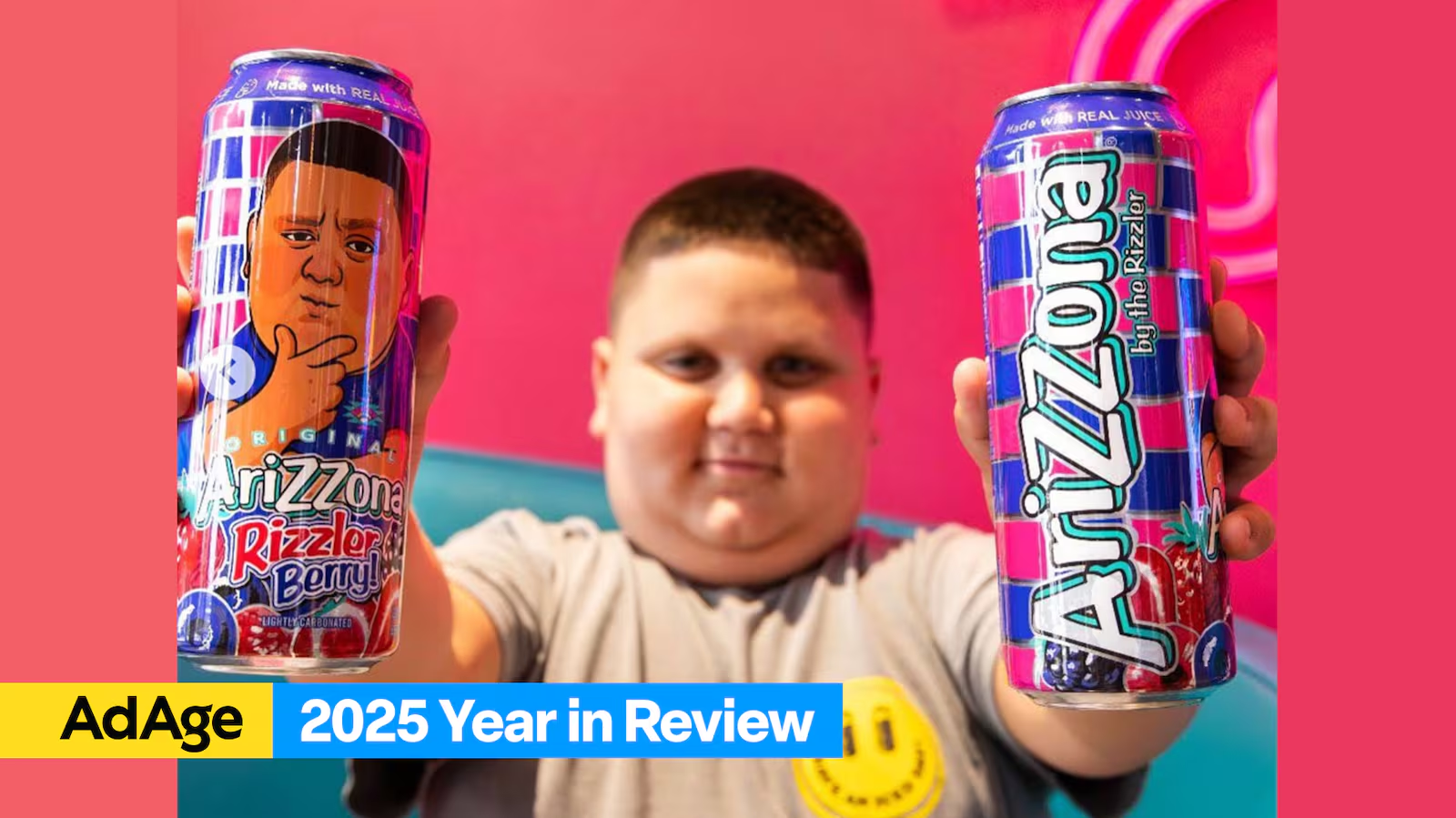
That being said, affiliate programs alone won’t be enough to differentiate your brand and grow your audience. After all, we just said everyone is jumping on influencer campaigns these days. To stand out, you need to pair them with something else — something that gives people an incentive to buy and builds loyalty.
Because if those new customers you worked so hard to get never transact again, you end up with a leaky bucket problem. And that takes budget, time, and effort to overcome.
Acquisition is only half the equation
The biggest gains aren’t going to come from squeezing more out of the same channels. They’ll come from shifting some of your spend to something new.
But that’s only half the battle — what happens after that purchase matters just as much.
If those customers don’t come back, acquisition gets more expensive every quarter. That’s why it’s critical to pair acquisition with some form of retention, like cascading cash back incentives or other targeted offers that give people a reason to buy again.
Looking for a tool to help? Kard’s pay-for-performance model is a way to scale engagement without the upfront costs and uncertainty of traditional media buying.