For brands and issuers, understanding Gen Z isn’t optional. As of now, Gen Z controls $450B in spending power, and that number is only going to grow as more of them enter the workforce. And this generation isn’t like any other.
They have different expectations around speed, personalization, and authenticity that most brands aren’t quite prepared for. In this piece, we hope to equip marketers with a better understanding of how Gen Z operates: what they buy, why they buy, and how.
Defining Gen Z: Beyond Age Demographics
Gen Z was born between 1997 and 2012. They’re the first generation to grow up entirely online. By age 15, most have used mobile payment apps, participated in creator economies, and followed global brands across multiple digital ecosystems. And they demand an omnichannel experience:
- Mobile: 95% of Gen Zers use their phones to shop.
- Social: 53% of Gen Zers have used “buy” buttons on social media networks.
- In-store: 61% of Gen Z adults reported they are more likely to shop in person than online compared to a few years ago.
But their digital experiences have shaped even more than that. Gen Z:
- Entered adulthood facing record inflation, rising living costs, and general economic uncertainty. So it’s not surprising that a study by Swift Prepaid Solutions found that 80% of Gen Z buyers said price is the most critical factor when making a purchase.
- Wants to support brands that align with their values. Roughly two-thirds of Gen Zs (64%) are willing to pay more to purchase environmentally sustainable products or services.
- Is both curious and skeptical. Half of US Gen Z consumers are open to exploring new brands. They’re also especially susceptible to brand switching — five times more likely than older generations to believe that newer brands are “better or more innovative” than established brands.
For brands, this mix of digital literacy and value-conscious pragmatism demands a different loyalty architecture — one that prioritizes transparency, immediacy, and authenticity.
Digital-First Shopping Behaviors and Platform Preferences
According to Sprout Social, 90% of Gen Zers say content on social (ads, influencer posts, and branded content) has influenced a purchase in the past 6 months. But they’re not just browsing on one platform.
They may start their shopping journey by seeing their favorite influencer plug a new makeup brand on TikTok. Then, they see the same item show up again on Instagram, so they figure it’s time to look into the product in more detail.
They head to the brand’s website to dive deeper, and then go on Reddit or talk to their peers IRL to get an honest review. Finally, they see a 5% cash back deal in their banking app and use their credit card to take advantage of the deal.
From a loyalty design perspective, this non-linear journey translates to three imperatives for brands today:
- Integrate where they transact. Loyalty programs must operate within the platforms Gen Z already uses: mobile banking apps, BNPL platforms, and digital wallets.
- Eliminate friction. If rewards redemption requires logging into a portal, you’ve lost them. Consider working with a commerce media network like Kard that automatically links purchases to rewards.
- Reward instantly. Seeing cash return to their account a few days after purchase solidifies your commitment to a truly seamless rewards experience.
Values-Driven Purchasing: Authenticity and Social Responsibility
A whopping 96% of Gen Z consumers say they shop with intention, and 66% believe their purchases should reflect their personal values.
As the CEO of Lightspeed, a POS and payments platform, put it earlier this year in an interview with Fast Company:
“A hallmark of Gen Z is coming of age in a hyper-connected world. In this world, every follow, like, repost, and even purchase is a direct reflection of a person’s identity and values. There is a never-ending exposure to global issues, where activism, accountability, and ‘cancel culture’ move at the speed of light.”
For brands, this means getting hyperspecific on who you are, what you stand for, and how you live out your mission. That applies to how your products are made, how you market your products, and how you interact with customers (through support and social media).
Here are some ways to think about this as you’re putting your marketing strategy together:
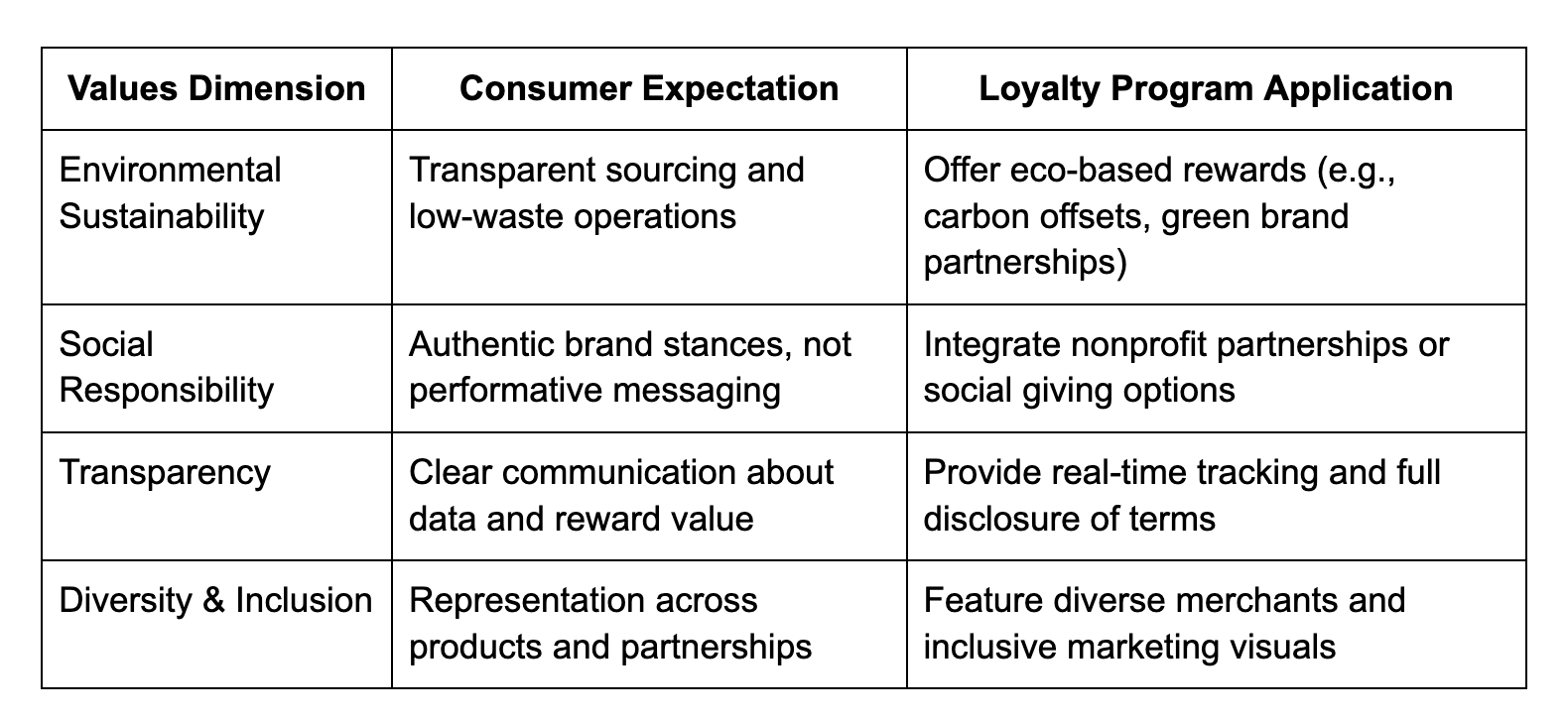
The real goal here is to establish trust. Without it, you’re missing the Gen Z mark.
The Instant Gratification Economy: Speed and Convenience Expectations
Gen Z doesn’t wait, and they don’t have to. Their spending behavior is shaped by platforms like Amazon, DoorDash, and Apple Pay, where immediacy is built right in. Nearly 20% of Gen Z consumers expect retailers to offer free same-day delivery.
Our own data reflects this expectation. In our 2025 Modern Consumer Journey Report, which analyzed over $3B-worth of transactions, we found that some of the highest spend categories were big box retailers (23%), quick serve restaurants (10%), and transportation & delivery (7%).
And the merchants in each of these verticals have seamless digital experiences — mobile apps, online order/in-store pickup, rewards programs, alternative payment options, etc. — that make it easy for consumers to purchase.
This reliance on convenience has implications for rewards programs, too. Traditional point-based systems, where value accrues super slowly, feel outdated to this demographic. Contextual rewards give them the confidence that your rewards are actually worth paying attention to.
For example, you could surface offers for particular items or categories of interest, local offers for stores or restaurants nearby, or send offer notifications based on a shopper’s typical buying schedule (e.g., they always buy groceries on Sunday, so send a cash back offer Saturday afternoon).
Personalization Expectations and Data Exchange Dynamics
Gen Z understands that personalization requires data — more than half (57.6%) say they “often” or “always” accept cookie notifications. But they expect transparency and control in return.
Programs that make preference management simple and explicit and match promos, rewards, and discounts to spending patterns or ethical interests win with this generation. AI-driven recommendation systems make this scalable, but just make sure to test rigorously. Again: trust is what you’re after.
Some best practices for personalization include:
- Capturing preferences at onboarding, not after frustration.
- Using clear “why we ask” language for each data point.
- Sending notifications like “We thought you’d like 7% cash back at [INSERT PARTNER BRAND].”
- Providing opt-outs without penalty.
Community, Social Proof, and Peer Influence Dynamics
As we hinted earlier, Gen Z relies a lot on their friends and peers for input on their buying decisions. Social proof is embedded in every stage of their decision.
For Gen Z, recommendations and user-generated content drive higher conversion than paid media. Reviews, creator videos, and TikTok “hauls” act as both advertising and validation. In fact, 33% of Gen Z have tried a new brand because of creative marketing.
Influencer trust is shifting toward smaller creators. Micro-influencers with direct audience rapport outperform celebrities because they feel authentic. Loyalty programs can tap into this dynamic by rewarding members for referrals, reviews, or social sharing.
Here are a few community-based tactics to try:
- Referral bonuses that reward both inviter and invitee.
- Badges or shareable milestones for engagement.
- Public leaderboards or challenges tied to values (e.g., sustainable shopping streaks).
Loyalty Program Preferences: What Resonates with Gen Z
Programs that add friction (extra logins, point conversions, delayed redemption) lose Gen Z’s interest quickly. Rewards like discounts at checkout and cash back offers, on the other hand, deliver tangible value almost immediately. In fact, a PYMNTS study found that after their first experience with card-linked offers, 93% of cardholders plan to use them again in the near future.
But cash back isn’t the only way you can incentivize folks with card-linked offers. Commerce media networks like Kard are rolling out item-specific rewards, location offers, category discounts, and even “offer boosts” to nudge consumers toward making a purchase.
Here’s a quick snapshot of how different loyalty models appeal to the Gen Z crowd:
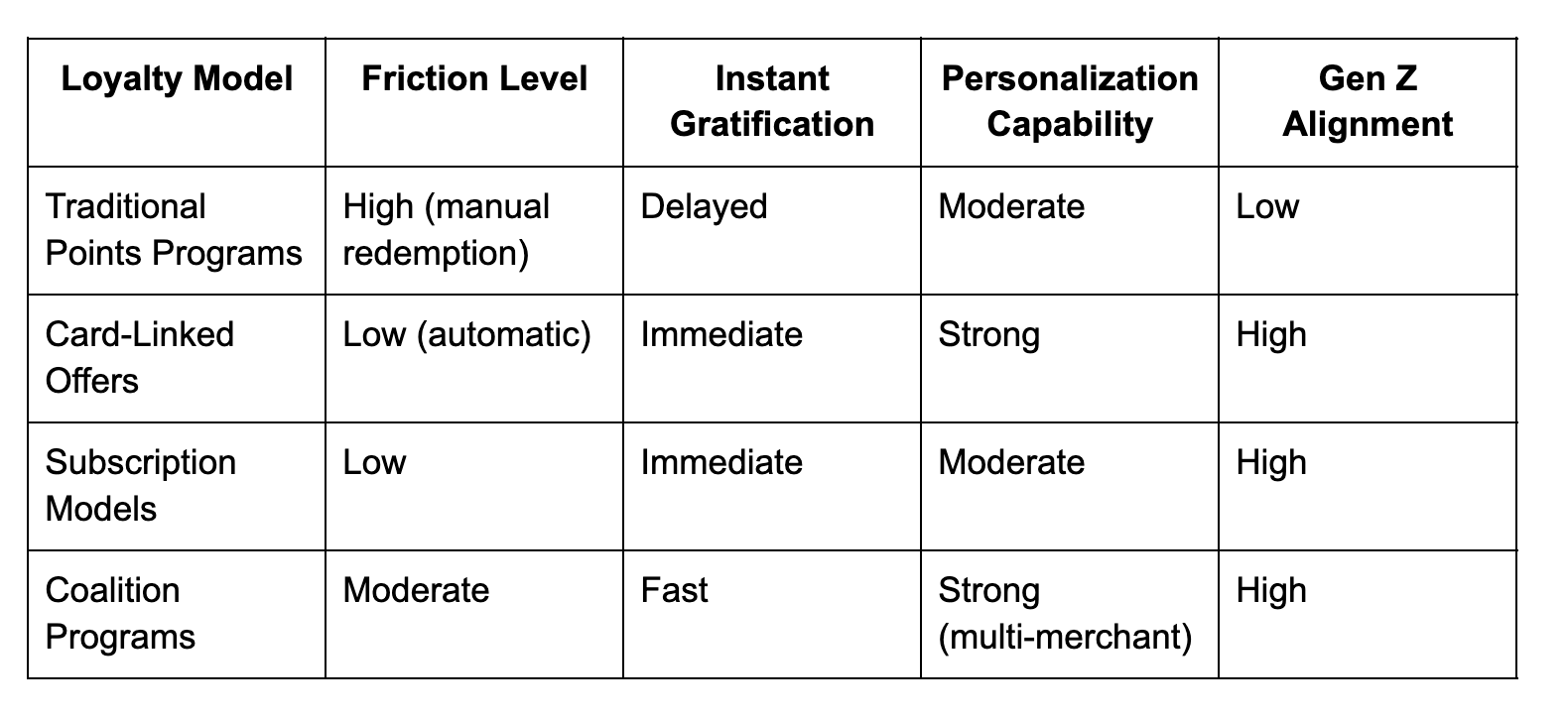
As you can see, Gen Z isn’t willing to “earn later.” Every purchase needs to reinforce instant value.
A Quick Note on Financial Behaviors and Spending Patterns
Economic volatility has made Gen Z pragmatic. They’ll spend freely on experiences, wellness, or tech, but only with brands that demonstrate reliability and shared values. If ongoing value isn’t clear, they’re quick to cancel.
For merchants, this means loyalty benefits must offset cost perception directly. A $5 or 8% cash back incentive can outperform months of passive point accrual because it reinforces financial agency: something Gen Z values deeply.
Actionable Strategies: Building Gen Z-Aligned Loyalty Programs
If you’re trying to level up your Gen Z targeting, start by:
- Conducting a friction audit. Evaluate where friction exists: manual redemption steps, email-only communication, and delayed updates. Map each against Gen Z’s digital habits — mobile checkout, instant notifications, social discovery.
- Prioritizing real-time integration. Adopt systems that process spend data in real time and trigger automatic reward delivery. Real-time feedback drives engagement and repeat behavior.
- Deliver personalization without intrusion. Show visible value for shared data. Provide clear opt-in controls and relevant recommendations tied to past spend or ethical interest.
- Build community incentives. Encourage referrals, social proof, and shared milestones. Reward engagement behaviors, not just transactions.
- Partner for scalability. Instead of building proprietary tech, collaborate with rewards-as-a-service platforms that already manage card-linked offers, data consent, and closed-loop attribution.
- Measure what matters. Balance short-term KPIs (redemptions, spend lift) with long-term indicators (retention, NPS, lifetime value).
Gen Z is Forcing Brand Marketing to Mature
Gen Z expects brands to act fast, align with their ethics, and prove value immediately. For marketers, this means integrating value into every single step of the customer journey — otherwise, Gen Z won’t justify your campaigns with their attention.
Looking for a way to target Gen Z directly?
Kard is the first independent commerce media network that uses predictive AI and first-party transaction data from millions of Gen Z shoppers to power hyperpersonalized offers. And by linking brand exposure directly to verified online and in-store purchases, Kard proves incremental impact at scale.
Schedule a demo today to see how it fits into your paid media strategy.
FAQs on Gen Z Consumer Behavior
1. What makes Gen Z different from Millennials?
Gen Z grew up entirely online, which drives their expectation for speed and convenience. They’re more value-driven yet less brand-loyal: half regularly try new brands, and they’re five times more likely to believe new ones are better (McKinsey 2024). Millennials build loyalty through familiarity, while Gen Z builds it through relevance and authenticity.
2. Why is authenticity so important?
64% of Gen Z will pay more for sustainable products, but they can spot empty promises instantly. They reward brands that prove impact through transparent reporting or partnerships with credible causes. Authenticity builds long-term trust; performance messaging alone doesn’t.
3. What types of loyalty programs appeal most to Gen Z?
Programs offering instant, automatic value rank highest. In fact, a study by PYMNTS found that after their first experience with card-linked offers, 93% of cardholders plan to leverage them again in the near future. Gen Z sees delayed point systems as effort without reward.
4. How does Gen Z feel about data sharing?
They’re pragmatic. Most will share data for personalization if the benefit is clear and the process transparent. Consent-based, opt-in personalization earns trust, and hidden collection destroys it. Brands should explain how data improves offers, not bury it in legal text.
5. How can brands measure loyalty program success with Gen Z?
Track a blend of transactional and emotional metrics. Redemptions, spend lift, and repeat rate show behavior, while NPS and satisfaction show trust. Closed-loop attribution from card-linked systems ties campaign spend directly to incremental revenue, giving marketers both precision and proof.