
Rewards programs incentivize a brand’s current customers (and new ones) to make more purchases. In fact, 60% of consumers say they remain subscribed to brand communications because they received exclusive deals or discounts.
If a customer is trying to decide between purchasing a product with a brand that offers a cash back reward and their competitor who offers no rewards, it’s likely that the customer will opt for the brand with the reward. Why not earn a couple of bucks while making a purchase?
And it’s a win-win situation: brands get a new customer (or reengage an existing one) and the consumer saves money on a future purchase.
But not just any reward will do. Consumers pay more attention to ads if they’re about discounts and promotions that are relevant to them. To optimize their ROI, marketers need to know reward types exist and which ones would be best to try for their audience.
Below, we explain how different types of rewards yield different outcomes, and in some cases, wasted spend.
What the Types of Brand Rewards Mean: Core Definitions and Categories
Because not all rewards are created equally, it’s important for marketers to first know what the types are and the function each serves.
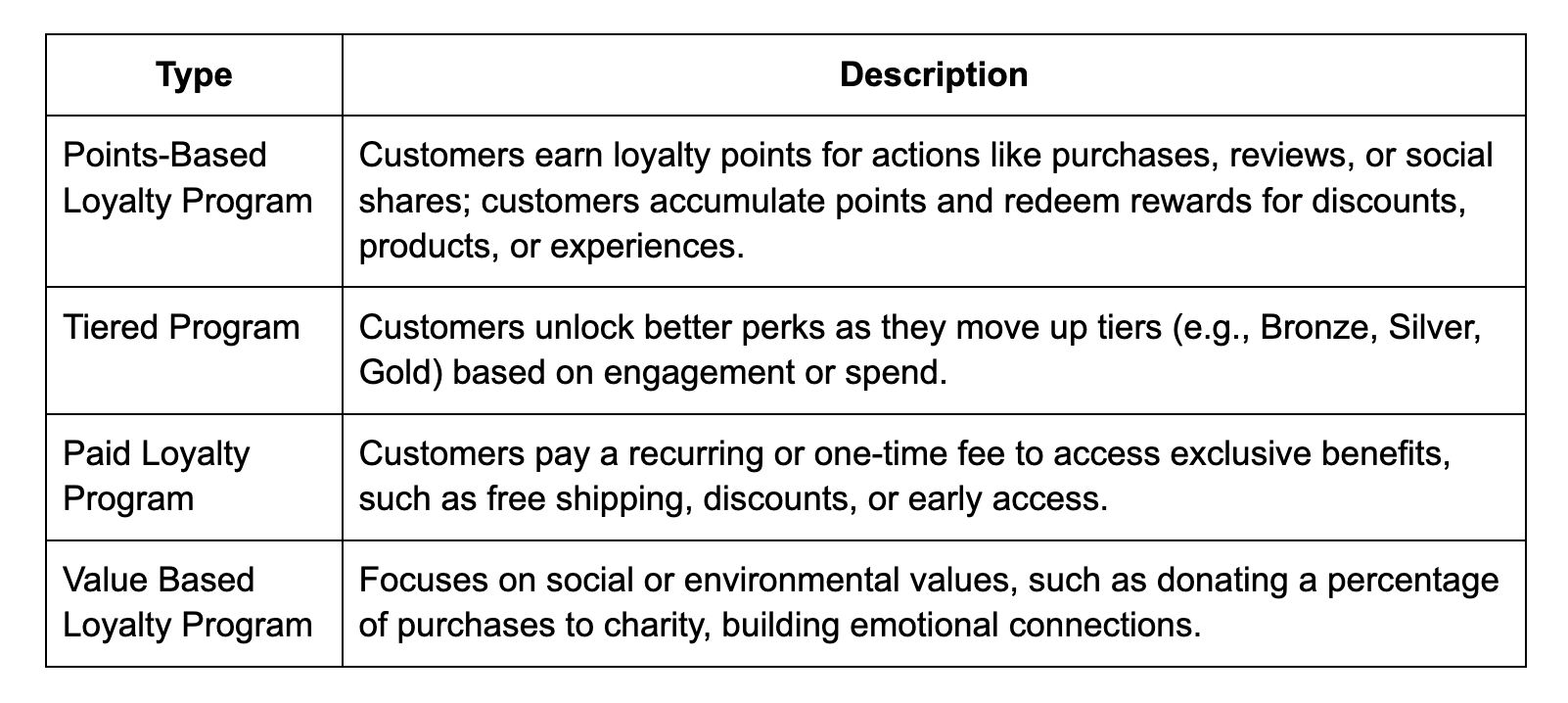
Most loyalty programs fall into one of four categories: points-based, tiered, paid, and value-based. Understanding these types of loyalty programs helps brands choose the right strategy for their goals. There are 5 main types of brand rewards:
1. Transactional/Financial Rewards
These come in the form of cash back, discounts, credits, and points redeemable for cash.
Cash back is a popular rewards program that allows a brand’s customers to receive a percentage of their purchase back as cash. Customers like cash back because it provides them with flexibility; they can receive it as actual cash, apply it towards future purchases, or even donate it to charitable causes. Some programs also allow customers to donate points to charity, supporting cause-related donations.
IPSOS reports that around 35% of consumers say they spend more because their credit card gives rewards.
However, these types of rewards can present the possibility of redemption friction. A consumer may not pursue a reward because they have to manually activate and add the reward to their bank account or credit card app.
That’s not always the case, though. Kard, for instance, automatically matches transactions to rewards. All the consumer has to do is swipe their card and cash will flow back into their account a few days later.
2. Points Programs
Points programs are a kind of deferred reward, where consumers build up points with each purchase. Those points can be “traded-in” for prizes, discounts, or redemption of actual goods.
While this kind of reward can boost engagement (consumers have to purchase a certain number of times to earn enough points to redeem a reward), it also delays their gratification.
3. Experiential Rewards
Experiential Rewards are those that provide customers with access to exclusive events and promotions, like VIP experiences to concerts and early access to concert ticket sales.
Customers like these types of rewards because they provide exclusivity and access to memorable events. These types of rewards offer the consumer emotional value. Some programs offer exclusive benefits such as early access to events, VIP experiences, or members-only events, often as part of a membership program.
Think about it: a consumer has always wanted to go on a cruise, but feels a ticket is too expensive on its own. If this same consumer is told by say, their credit card, that they could accumulate points that could be used toward a cruise ticket, this consumer is emotionally drawn to the program and therefore fulfilling their longtime goal of attending a cruise.
4. Tiered/Status Rewards
Tiered and status rewards provide progressive benefits based on engagement levels. They help establish customers as rewards “members” — making them feel like they belong to an exclusive club — and provide customers with varying degrees of exclusivity and perks.
In tiered programs, customers unlock better perks as they ascend levels like Bronze, Silver, and Gold. Customers enjoy these types of rewards because 1) they offer perks and 2) create an aspirational goal for them to work toward. Loyal customers are more affordable to retain than acquiring new ones, and loyal customers typically spend more and generate larger transactions.
5. Gamified Rewards
Gamification is the process through which earning rewards is turned into a game. After accruing a set number of points, for example, a customer may place on a leaderboard or be allowed to spin a digital wheel that rewards the customer with a certain prize.
Consumers enjoy gamified rewards because they provide fun and active engagement, allowing brands to collect important behavioral data that then influences which promotions to offer, and helps brands stand out amongst competitors.
6. Partner/Coalition Rewards
Partner and coalition rewards are another way for brands to gain and retain customers. Essentially, these programs involve multiple brands across a single shared loyalty program. Consumers earn points by shopping across brands in the coalition and can likewise spend their points at these brands.
Or, two or more brands may partner up with each other to create some kind of experiential reward or gamified sweepstakes.
Customers enjoy these types of rewards programs because they provide them with a shopping experience with diverse options to choose from, and might come with a bigger prize. Such programs are especially beneficial for companies with multiple sub-brands because they can increase customer retention and they utilize a single rewards issuing platform. That is, rewards are centralized across brands, leaving consumers and marketers with fewer accounts to manage.
Why Types of Brand Rewards in Customer Loyalty Programs Matter for Performance and How to Drive Engagement
A well-structured rewards program is a measurable growth driver, and each type of reward plays a distinct role in the customer journey:
- Instant cash back brings new customers in and prompts immediate action. Real-time rewards drive measurable lift in transaction frequency, particularly among price-sensitive or high-frequency shoppers. The number one food delivery service saw a 44% higher new customer spend rate in 7 weeks using Kard’s cash back offers.
- Points-based rewards programs encourage habitual engagement. The more often a customer returns, the more value they see, resulting in higher LTV over time.
- Tiered or status type rewards tap into aspiration. Customers spend more to reach the next tier, increasing share of wallet and deepening commitment.
- Experiential rewards build emotional loyalty. These offers stand out in saturated markets and strengthen affinity through unique, memorable moments.
And now, personalized offers are now table stakes. McKinsey reports that 71% of consumers expect personalization, and 76% feel frustrated when it’s missing. The most effective programs combine these types of reward to drive breadth and depth of engagement.
How to Measure ROI of Brand Rewards
Measurement is the sticking point for many marketing leaders. According to EY, 41% say they struggle to quantify the impact of their loyalty or rewards investments. But with the right framework, you can show the ROI of rewards — and get buy-in for future loyalty and retention strategies.
The gold standard is incrementality testing: measuring the difference in behavior between users who saw a reward and a statistically matched group who did not see a reward. You can use this to show:
- That your rewards do actually drive consumer behavior (increases in transaction volume, frequency, and spend per user)
- That different types of rewards drive different kinds of consumer behavior (how those KPIs change based on what rewards are presented)
But incrementality alone isn’t enough. To run those tests accurately, and to understand performance across channels and segments, you also need closed-loop attribution: the ability to tie reward exposure to redemption and transaction at the individual level. Closed-loop attribution connects the full journey:
Who saw which offer → When they saw it → If and when they acted → What they purchased → Whether the reward was redeemed
Together, incrementality and closed-loop attribution allow you to measure:
- Net lift in spend or frequency
- Redemption-to-purchase conversion rate
- ROAS by reward type or segment
- Cost per incremental transaction
Without both, you risk misattributing organic behavior. Or worse, investing in rewards that don’t move the needle. With both, you get a clear, defensible view of performance that you can use to optimize targeting, reward mix, and budget allocation.
5 Components That Shape Types of Loyalty Programs: Design and Delivery
1. Customer Engagement and Community
Rewards programs should actively engage with customers or create a sense of community between them and the brand. This can take place in the form of social media engagement with customers or exclusive meetups with other rewards members.
This helps foster an emotional affinity between customer and brand. Marketers should care about implementing this design element because it can yield word-of-mouth referrals that can convert non-customers into new, potentially recurring ones.
KPIs to watch for when you’re trying to beef up your engagement include:
- Rewards program enrollment
- Increased sales
- Customer feedback (online via social media or directly to the company)
2. Memorability
Customers should easily remember your brand. Memorable rewards, especially experiential ones, help accomplish this and may lead to word-of-mouth marketing.
Brands should care about weaving this element into their rewards programs because they can inspire customers to increase their spending to hopefully attain the memorable reward.
This is really hard to measure, but sentiment and mentions on social media is a really good place to start. Asking “How did you hear about us?” on your checkout page could be another good way to gather this data.
3. Personalization
Customers want to feel valued and like the offers they receive are tailored to their interests. If they receive personalized offers, they’re more likely to 1) pay attention to rewards program marketing and 2) repeat purchases.
And the only way to get that personalization is first-party data. Think:
- Past purchase behavior
- Category preferences
- Time of day or day-of-week activity
- Geographic location
- Device or channel usage
The more specific the signal, the more relevant the offer. For example, a customer who regularly orders lunch near their office might be more likely to redeem a midweek discount from a nearby restaurant then a weekend dining deal.
You might even match particular amounts of cash back to a specific audience segment:
5% cash back for existing customers
10% cash back for lapsed customers
15% cash back for people who’ve never shopped with you before
4. Instant Delivery
Rewards perform best when users see the benefit right away. Real-time reward delivery reinforces behavior and drives higher transaction frequency.
Consider triggering rewards immediately after purchase, with mobile push or in-app confirmation. Then track transaction frequency — ideally, they come back and use another reward in 7 to 14 days.
5. Consistent Communication
Rewards programs should consistently maintain communication with customers about recurring or new rewards and offers.
These messages could occur each time a customer earns a reward, on a quarterly basis to alert the consumer of unused points, and so on. For example:
For example:
- Immediately after a reward is earned or redeemed → reinforce the benefit and prime for repeat purchase
- Monthly or quarterly summaries → show unused points, upcoming expiration, or progress toward the next tier
- Contextual nudges → based on location, shopping category, or time since last engagement
Brands can benefit from consistently communicating with their customers because it builds trust, provides helpful content for consumers, and can lead to increased customer spending. Even better if the messages are personalized. “You’re $5 away from your next reward” or “You’ve earned a surprise offer based on your favorites” turn passive members into active participants.
The Data You Need to Deliver Brand Rewards at Scale
Different types of data influence how brands deliver rewards.
Transaction History
Transactional data is not something to be slept on. If a brand has transactional data on rewards members – like which category of products they tend to buy, typical amount spent, and frequency of purchases – it should offer personalized rewards.
These can include free content and experiences tailored to a customer’s interests. Individual personalization of rewards leaves a profound impact on customers; it helps them feel like they’re more than just a single customer in a crowd of many. Deloitte Digital found that 73% of shoppers want personalized rewards and that 3 in 4 customers are more likely to purchase from companies who deliver personalized experiences.
Engagement Data
Engagement data that tracks how a customer engages with a brand can be used in gamification rewards programs. Data can include repeat purchases and referrals a customer carries out.
In a gamified rewards program, brands can incentivize customers to complete surveys by offering points or tier progressions for completion of these surveys.
Category Spend
Tracking the categories in which consumers spend can help a brand decide how to personalize rewards to its customers. Brands can track how many items a customer purchases within a category, if these items are bought together, and how much a customer spends within a category, for example.
Did you know? Kard is tracking category spend across all kinds of verticals (retail, QSR, travel, subscription, transportation, and more). Download our Modern Consumer Journey report to learn what categories younger generations splurge on, plus things like why Q1 might be your most overlooked growth opportunity and the best times (and days) to launch offers or run promotions.
Tier Status
Tracking how much customers in an entry-level tier spend and on what basis can help brands create personalized deals. The same goes for evaluating data of customers in a higher-level tier.
Churn Signals
Churn rates are significant and should be tracked by brands because they can illuminate customer (dis)satisfaction, service performance, and how effective a brand’s rewards program is.
And not all churned customers are lost forever. A company can use data from a churned customer – the points they’ve accrued or how many points they need to gain to reach their next reward – to offer them a personalized and steep discount for their next purchase, hopefully attracting this customer back to the rewards program and company.
Companies can win back customers by offering them exclusive deals to return, and these customers could potentially become lifetime ones if presented with the correct re-engagement promotion.
Industry Use Cases: Applying Types of Brand Rewards to Real Verticals
The most effective types of rewards vary by industry. Retail brands may optimize for frequency and basket size, while subscription companies focus on trial-to-retention conversion, and QSRs use time-based or visit-based incentives to shift habitual behaviors.
Here’s how different industries can tailor rewards to meet their unique customer behaviors:
Types of Brand Rewards in Retail
Retailers benefit most from a mix of instant cash back, tiered offers, and category-based targeting. These formats drive urgency, increase average order value, and reward repeat spend.
For example, a leading apparel brand used personalized offers through Kard to drive a 167% increase in WoW revenue over three months by aligning reward timing with seasonal demand. Another footwear brand leveraged real-time cash back offers to win 35% more market share versus competitors, capturing Gen Z and Millennial shoppers looking for value without friction.
What works in retail:
- Flash rewards tied to collection drops
- Status-based perks for top spenders
- Category-specific cash back (like accessories or shoes)
These rewards work best when tied to shopping triggers (restocks, seasonal sales, or loyalty tiers) and amplified through push or email channels.
Types of Brand Rewards in Subscription
Subscription businesses rely on trial conversion, retention triggers, and plan upgrades—making cash back, bonus-for-renewal, and milestone rewards especially powerful.
A national meal kit company saw 81% revenue growth using rewards to reactivate dormant subscribers and incentivize upsells. A major streaming service increased subscriptions 410% in one year by offering targeted, limited-time cash back offers for new signups and plan upgrades.
What can work well for subscription:
- Cash back for first-time subscription
- Rewards for 3-month or annual plan commitments
- Surprise bonuses tied to user milestones (e.g., 10th workout or show watched)
These rewards help reduce churn and reinforce value during critical moments, like the end of a free trial or just before renewal.
Learn what $3B in real transaction data from 47M+ cardholders says about the subscription landscape — download our Consumer Trends in Subscription report.
Types of Brand Rewards in QSR
Quick-service restaurants win with habit-forming, time-sensitive, and progress-based rewards. Incentives like “Buy 5, get 1 free” or “Earn 2X points on breakfast orders” nudge customers toward repeat visits and new behaviors.
Effective QSR programs also lean into challenges and upsells: encouraging guests to add items (“Get a free drink with any combo”) or complete missions (“Visit 3 times this week to earn a bonus”).
Here’s a sampling of what typically works:
- Visit frequency punch cards
- Bonus points for off-peak hours
- Time-bound challenges to boost engagement
Want to know how younger consumers choose where to eat, the biggest drivers of loyalty and repeat visits, and where QSRs can capture more share of wallet? Download our Consumer Trends in QSR report.
Checklist for Selecting the Right Type of Reward
Reward programs perform best when they align tightly with customer behavior and business strategy. These seven practices can help teams drive measurable growth:
✔ Match Reward Type to Purchase Frequency
High-frequency purchases? Use instant cash back. Infrequent purchases? Consider tiered or milestone-based incentives.
✔ Prioritize Merchant-Funded Models
Offset costs by shifting funding to participating brands. That will preserve your margin while expanding your reach.
✔ Personalize by Behavior Segment
Target based on actual actions like daypart patterns, categories browsed, or repeat rate — not just profile data.
✔ Optimize Reward Timing
Trigger rewards when customers are most likely to act: after cart abandonment, near restock cycles, or before renewals.
✔ Implement Closed-Loop Measurement
Track exposure, redemption, and transaction to quantify incremental lift and ROI.
✔ Iterate Continuously
Use test-and-learn cycles to refine reward types, delivery methods, and targeting strategies.
7 Challenges When Selecting Types of Brand Rewards (and How to Solve Them)
Even the most well-intentioned rewards programs can fall short if the mechanics aren’t aligned to business goals (or customer behavior). The most common pitfalls include:
1. Reward Type Misalignment
Offering points when customers want instant value can hurt conversion. Start by mapping reward format to buying behavior.
2. Attribution Complexity
Without closed-loop tracking, it’s hard to know which rewards drive true lift. Invest in infrastructure that ties exposure to transactions.
3. High Reward Costs
Generous incentives can erode margins if not merchant-funded. Look for commerce media solutions that shift the cost to brands.
4. Low redemption rates
If rewards go unnoticed or require too much effort to redeem, they don’t add value. Test auto-applied rewards or in-moment nudges.
5. Personalization gaps
Irrelevant offers erode trust. Use first-party data to segment by behavior, not just demographics.
6. Integration delays
Long launch timelines reduce momentum. Choose platforms that offer API-based or no-code integration to accelerate deployment.
7. Privacy compliance risk
Collecting behavioral data for personalization requires careful handling. Partner with platforms built with consent and compliance in mind.
Addressing these challenges early helps marketers move faster, optimize smarter, and avoid costly missteps.
Turn Brand Rewards Into Measurable Growth
When designed for real behavior and powered by the right technology, rewards programs boost retention, increase revenue, and reduce acquisition costs.
Instant cash back, in particular, drives measurable lift in spend and frequency, and commerce media platforms like Kard make it easy to deliver these kinds of rewards — and the best part? They’re pay for performance.
Curious what Kard’s network has in store for your brand? Request a demo today.
FAQs About Types of Brand Rewards
Which type of brand reward delivers the highest ROI?
Merchant-funded card-linked rewards typically deliver highest ROI because net program cost is dramatically lower (co-funded by merchants) while engagement remains high. Instant cash back drives strong transaction frequency lift while maintaining favorable economics compared to margin-funded points programs.
What metrics should I track to measure reward program effectiveness?
Track both engagement metrics (redemption rate, activation rate, repeat purchase frequency) and financial metrics (incremental revenue, ROI, CAC reduction). Use cohort analysis comparing reward-exposed customers to control groups to prove incrementality. Closed-loop attribution connects reward exposures to verified transactions.
How long does reward type optimization take to show results?
Behavioral metrics improve within 60-90 days (transaction frequency, redemption rates). Card-linked platforms with real-time attribution enable faster optimization cycles by connecting reward exposures directly to verified purchases within days. Full program ROI requires longer measurement windows to account for cost amortization.